
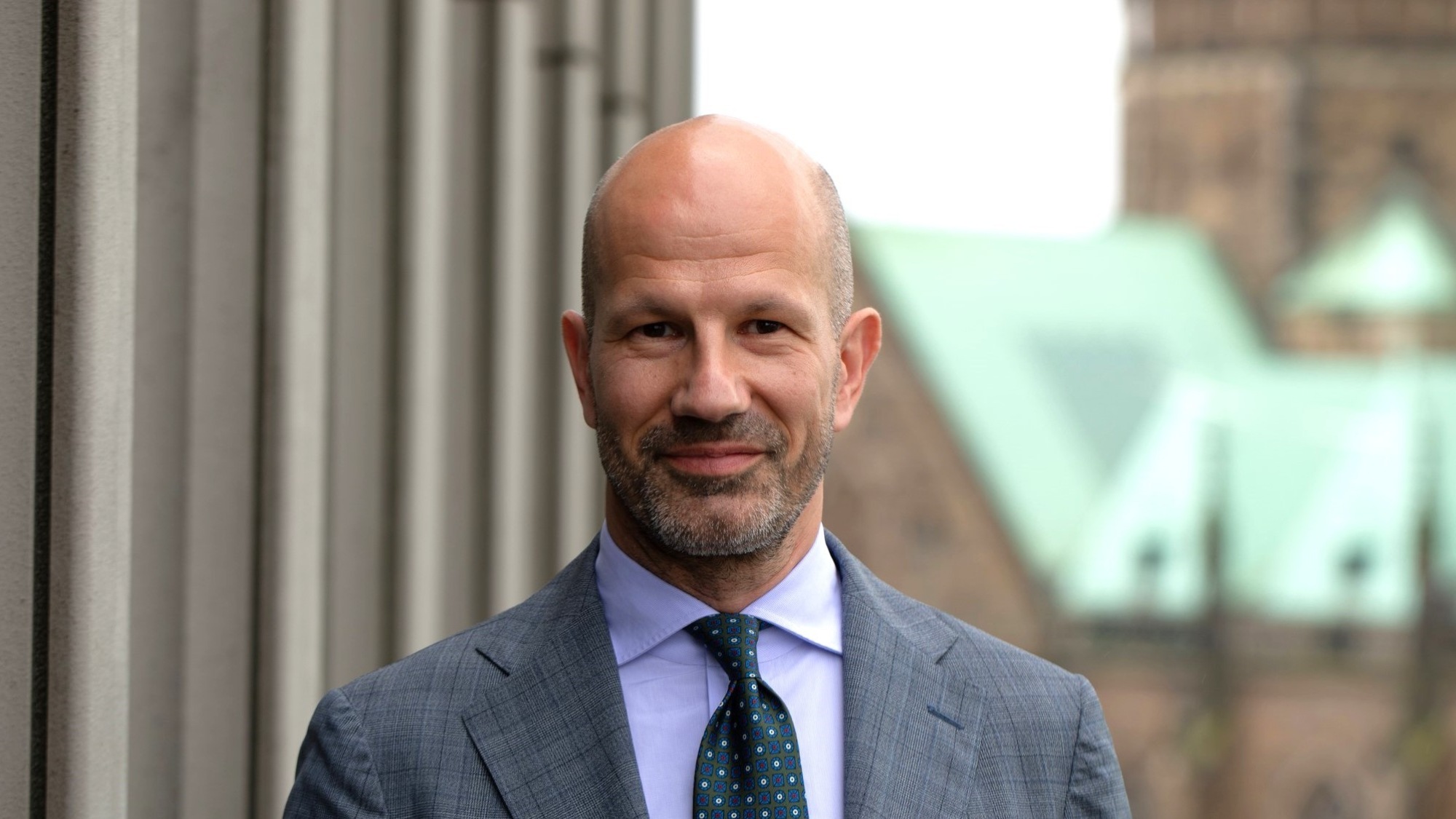
© Matej Meza / Universität Bremen
“All Human Beings Are Born Free and Equal in Dignity and Rights”
This is stated in Article 1 of the Universal Declaration of Human Rights. An interview with legal expert Professor Lars Viellechner for Human Rights Day on December 10
The Universal Declaration of Human Rights was adopted by the United Nations in 1948. It is comprised of 30 articles that apply universally, while serving as moral guidelines and the foundation for agreements and laws. According to Professor Lars Viellechner, Director of the Centre of European Law and Politics, there are new and pressing challenges to ensuring the protection of human rights, which include climate change and digitalization.
Professor Viellechner, how important was the declaration at the time, three years after the end of the Second World War?
This was basically the initial spark for a second era of human rights. It followed the realization that national guarantees of rights, such as those enshrined in constitutions in the course of the American and French revolutions, could fail. The world needed an international safety net that would protect individuals when nation-states failed to uphold their rights, and international organizations to ensure their enforcement.
Initially, this was a non-binding declaration.
Legally binding human rights treaties only came about later. The creation of bodies such as the European Court of Human Rights was a significant step in enforcing these treaties. However, the fundamental challenge remained: The decisions of these courts are not enforceable against nations, and they rely on the voluntary cooperation of governments. This limitation is not unique to international courts; national constitutional courts also depend on the willingness of governments to comply. In cases of serious human rights violations, however, the question arises as to whether the international community or individual nations have the right to intervene, as was the case in Kosovo in the 1990s.
Nevertheless, the declaration has had a great effect.
Without a doubt. The Universal Declaration of Human Rights has had a significant legal, moral, and political impact. People can rely on and also demand human rights on an international level. However, the concept of human rights is not universally accepted, and is often seen as a Western ideology that does not align with the cultural values of certain regions. In this respect, human rights are also subject to debate and criticism.
The challenges to human rights today are not the same as they were 77 years ago. What are the current difficulties?
The most pressing challenges of our time are climate change and digitalization. If the natural foundations of life are destroyed, human rights become impossible to exercise. The International Court of Justice of the United Nations in The Hague has recently confirmed that protecting human rights also requires nations to take action against climate change. The Federal Constitutional Court has also ruled that human rights have an intertemporal component, which is already affected. In essence, this means that if we fail to act now, our children will no longer be able to exercise their rights. A different school of thought wants to shift away from a human-centered worldview and create rights for nature, for rivers, mountains, or forests, which can then be protected by humans on their behalf. But this idea is not yet widely accepted.
What about digitalization?
Human rights are traditionally defensive rights of individuals against the state. In the course of digitalization, however, freedom is also threatened by the large private online platforms such as X, Facebook, or Google, which have an enormous market. The question is whether a private, transnational dimension of human rights needs to be considered here.
Does it?
I definitely think so. In the digital age, functions that were traditionally the exclusive domain of national governments have been taken over by private individuals who set their own rules. This has created a need for regulation that balances the dual role of online platforms. On the one hand, they facilitate freedom of information and expression, opening up new global communication spaces. On the other hand, they also pose a threat to these very freedoms. This creates a complex challenge of protection and limitation, and requires a delicate balance of the two.