

© Exzellenzcluster Die Marsperspektive
Materials for Mars – Solutions for Earth
As a holder of a U Bremen Excellence Chair, Nicola Marzari has researched how simulations, machine learning, and AI can help in the development of new materials
The vision is promising. Those who develop novel materials no longer have to start in a laboratory. Calculating on a computer how a material should be composed and manufactured to exhibit the desired properties is more precise and resource-efficient. Physics professor Nicola Marzari, together with researchers from Bremen, has found out how this can be achieved. The newly developed methods, which combine AI with quantum mechanical calculations, could even be relevant for Mars missions.
“The Excellence Chair Program offered me new opportunities and also new areas of research,” says Nicola Marzari, looking back. For seven years, from 2019 to 2025, he worked together with researchers from Bremen on methods that could revolutionize the development of new materials and substances. Until then, these materials were mostly created using extensive laboratory experiments, which often involved considerable time and expense. Marzari was not willing to accept this situation. In his New Materials on Demand research project, one question in particular played a central role: How accurately can simulations predict material properties? And are they reliable enough to ensure that the calculated composition of the material will actually produce the desired properties?
Research in Lausanne, Cambridge, and Bremen
The impetus for the ambitious research project came from Marzari’s appointment to an Excellence Chair at the University of Bremen. Chair holders are outstanding researchers who act as bridges between the University of Bremen and the world’s leading universities. Nicola Marzari is the director of the MARVEL Centre (Materials Design at the Exascale), a European Centre of Excellence for computer-aided materials design. He also researches and teaches at the University of Cambridge.
“He is one of the most important physicists of our time, as his appointment to the Cavendish Professorship in Cambridge impressively demonstrates,” says his host at the University of Bremen, Professor Lucio Colombi Ciacchi. For him and his team, Marzari choosing Bremen as an additional address was proof of the quality of their work. The collaboration with the internationally renowned physicist has also significantly increased the international visibility of Bremen materials research, says Colombi Ciacchi, who is the founding spokesperson of the MAPEX Center for Materials and Processes at the University of Bremen. Marzari, who found a suitable research environment at the university, also expressed his appreciation. “Without the Excellence Chairs program and the great collaboration with my host, Professor Colombi Ciacchi, I probably would never have started working on the research we conducted in Bremen.”
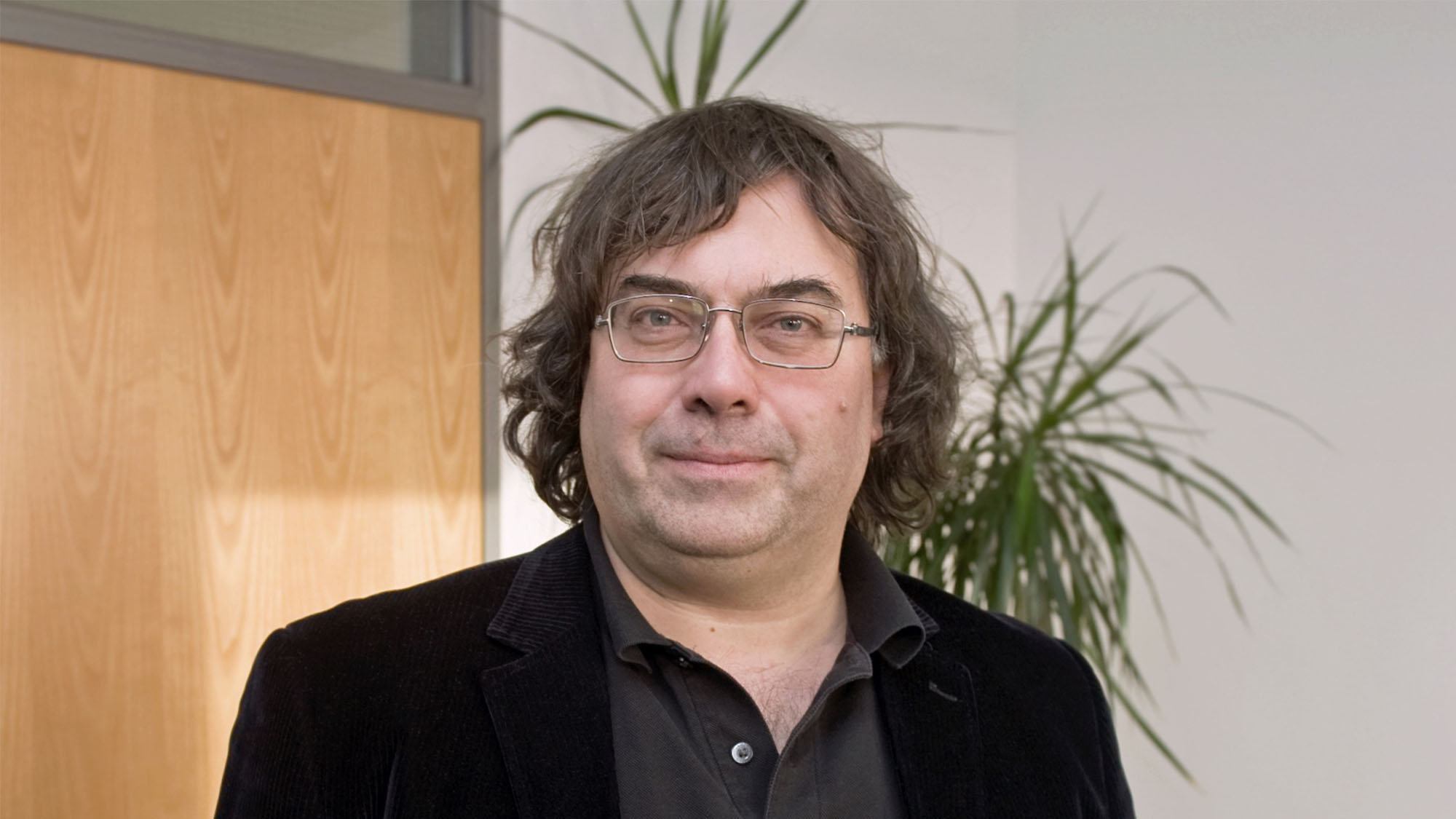
© Harald Rehling / Universität Bremen
Quantum Mechanical Calculations as Training Data
Accurate quantum mechanical calculations of materials with great technological significance have long been one of Marzari’s and his team’s main research focuses in Lausanne. In Bremen, he combined this approach for the first time with machine learning methods, a subfield of artificial intelligence. Similar to the development of new materials in a laboratory, quantum mechanical methods also have a decisive disadvantage: they are time-consuming and expensive, particularly because they require exceptionally large computing capacities. Can precise results also be achieved more quickly and with less effort if the relevant machine learning applications are pre-trained on data from quantum mechanical calculations? For Marzari and his team, this was a promising but completely open research question. After all, the aim was to achieve the same level of precision in material calculations in significantly less time and with considerably less computing power. “We were very pleased that machine-learning potentials – as they are called today – can actually be trained on quantum mechanical results,” he says, looking back. “They can capture the accuracy of quantum mechanics and at the same time transfer it to simulations that can cover important length and time scales.”
Extracting Metals from Minerals
The possible applications are diverse, ranging from fundamental research on developing more powerful batteries and accumulators – a dissertation topic in the project – to using electromagnetic radiation to identify materials, and to electrochemically decomposing minerals to extract metals. The latter is particularly important in the second project phase, which began in early 2026. “We have now developed these very powerful methods, and it is time to apply them,” says Marzari, who is contributing his knowledge to the new Cluster of Excellence “The Martian Mindset.”
The cluster is funded by the German Research Foundation (DFG), and involves cooperation between different faculties at the University of Bremen, as well as other Bremen institutes and international partners. Around 100 researchers from disciplines such as engineering, robotics, communications technology, psychology – and, of course, materials science – are involved. A central question of the project is how to produce materials on the Red Planet from which important wear parts and spare parts can then be manufactured – for example using 3D printing. This is a new and exciting experience for Marzari with his background in physics and materials research. “When we develop materials for applications on Earth and for industry, we normally have to consider a complex balance of performance, cost, and sustainability,” he says. “This means that we are limited to materials that may not deliver the best possible performance, but perform well in the other categories.”
Martian Mindset Requires Sustainable Solutions
For materials used in space, however, performance is usually the only decisive factor. The need for sustainability already arises from the limited transport options on board the space shuttle – and from the conditions on the planet itself. “We cannot use fuels because we cannot take them with us. We cannot use oxygen because there is none there. These hard constraints force us to rethink how we produce materials,” says Marzari. “We are trying to develop completely new electrochemical technologies for the sustainable production of metals, plastics, and important organic molecules from renewable but scarce resources,” adds Lucio Colombi Ciacchi. “Our joint theoretical and simulation work will play a central role in this, enabling us to accompany the experimental processes with digital twins.” Production processes that function under such hard constraints could also be useful on Earth as a way to conserve resources and combat climate change and the exploitation of nature. “That,” says Marzari, “is what I particularly like about the project.”