© Leona Hofmann / Universität Bremen
Starting Conversations on Values
Using the Core Values Compass in day-to-day work
Each of the 1,400 employees working in administration and university operations at the University of Bremen likely has their own idea of which values are most important in everyday work, whether it is being team-focused, reliable, or taking initiative. However, it is not something that is often discussed. This is where the Core Values Compass comes in. It has been in use at the University of Bremen since early 2025. A task group led by Frauke Meyer, Director of Finance and Administration, surveyed employees and, based on the results, identified eleven values intended to shape daily work.
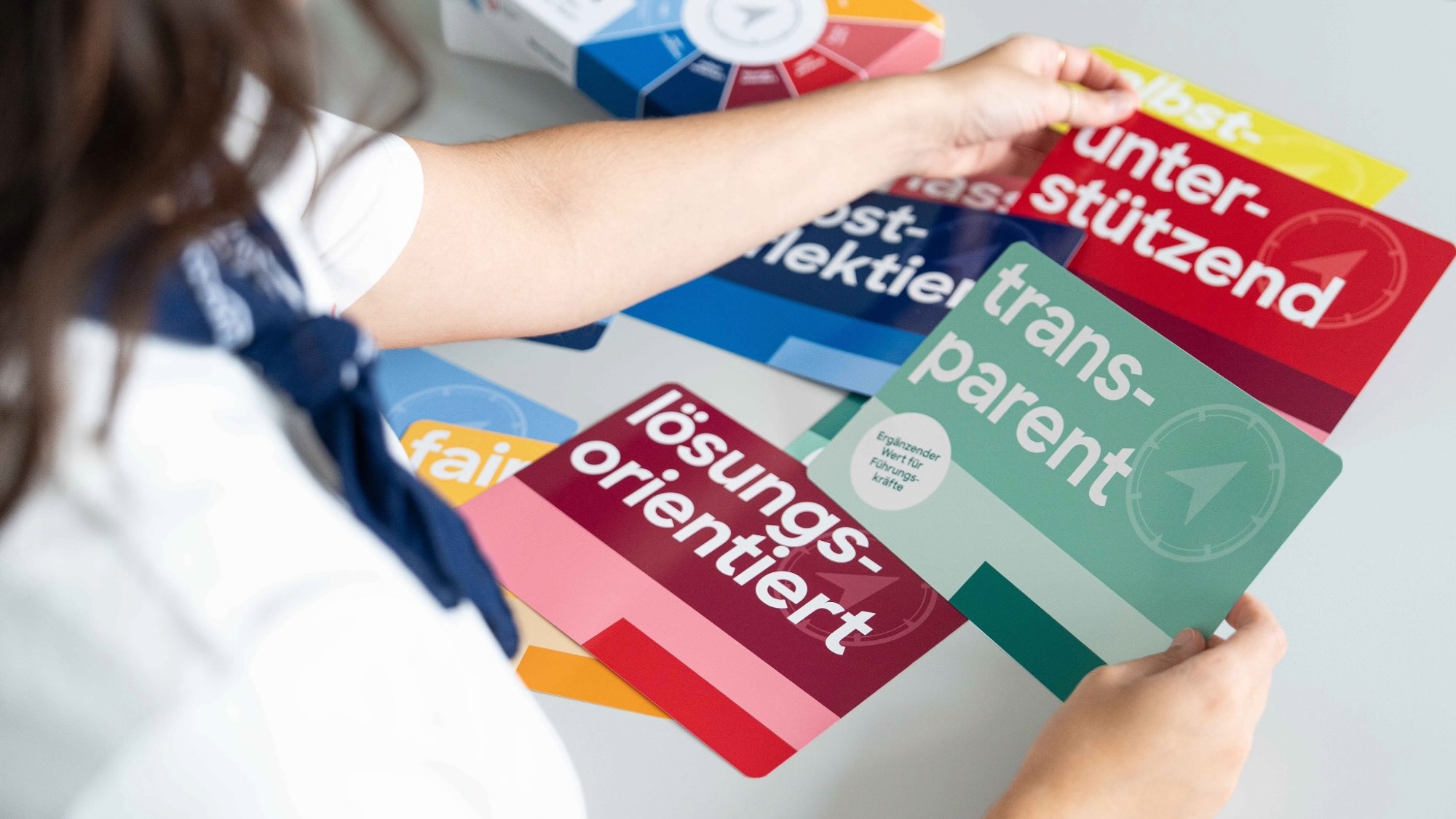
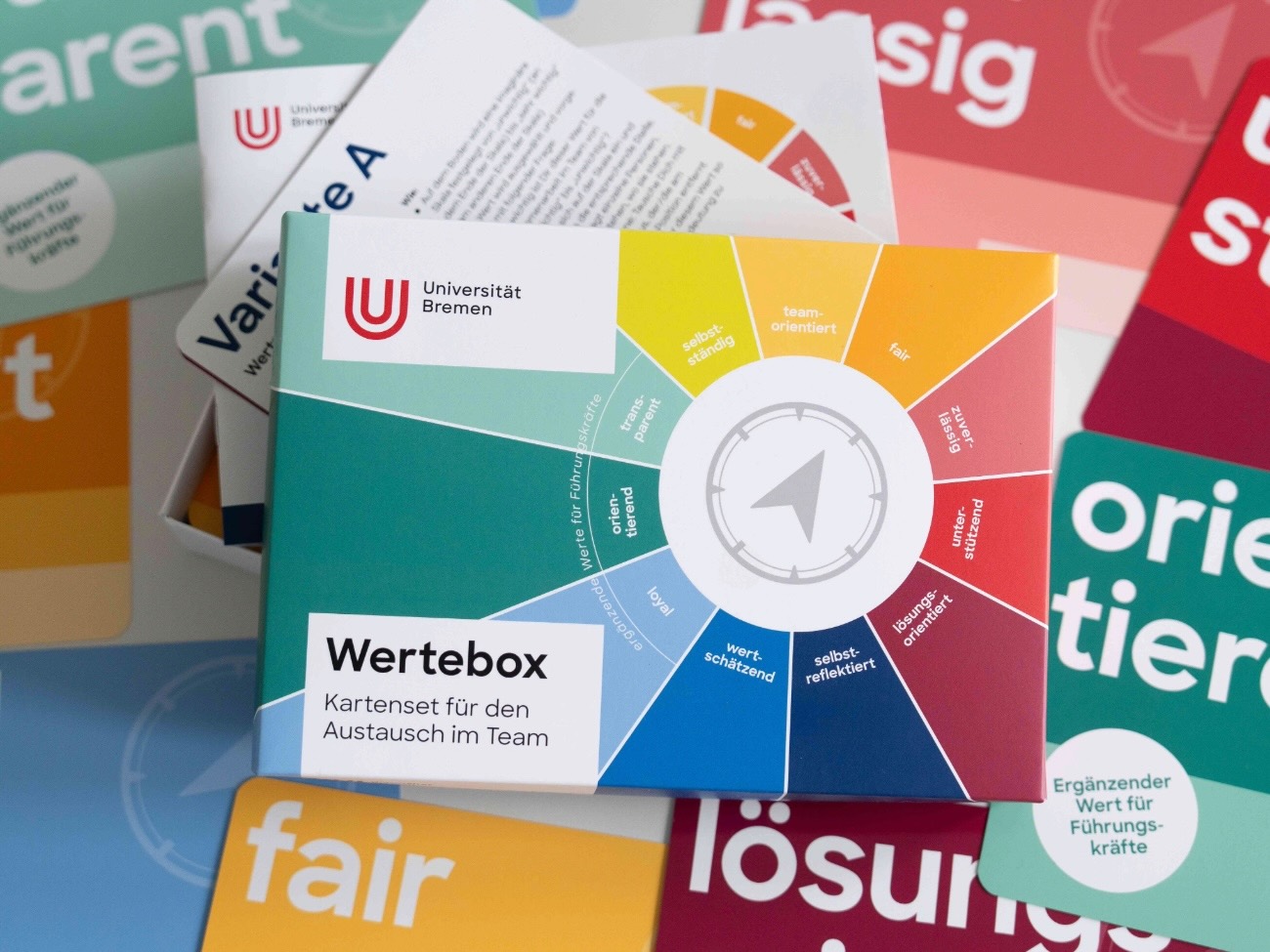
An information page on the Core Values Compass is available, as is a Values Box containing cards that explain the individual values and pose questions for team discussion. “Despite this, many teams wonder how to have conversations about the Core Values Compass,” says Alexandra Baumkötter, who leads the Core Values Compass project for the human resource development team. That’s why she and her team are offering workshops for leadership and staff. Dennis Steffens, head of the Student Office, along with Anika Müller-Karabil and Martina Behrens, who work in the Language Centre of the Universities in the Land of Bremen (SZHB), provide additional guidance on how individual teams can work with the Core Values Compass.
Dennis Steffens, Student Office: “The atmosphere in our team has improved”
Dennis Steffens: “As is likely the case in many teams, we have a heavy workload. The number of applications is increasing, and there’s a lot of stress – especially around application deadlines. This is why I believe it is important to regularly reflect on how we interact with one another within the team, as well as how we collaborate with other teams.
When the Core Values Compass was officially introduced in April 2025, many team members attended the informational event in the lecture hall building. There was a lot of interest, so we thought about how to implement the Core Values Compass in our work.
@ Leona Hofmann / Universität Bremen
Every three to four weeks, as part of our team meeting, we allocate 15 to 30 minutes to discuss the Core Values Compass. We rotate who selects a value to present. There are no rules for the presentation, so each session is different. Some colleagues talk about the value; some use PowerPoint presentations or games. Afterward, we discuss the particular value in smaller groups or with the team as a whole. We have also met in smaller groups to look at the Core Values Compass in a playful way using the Values Box, as well as to discuss how individual values relate to our work situation. In such settings, we primarily discuss how these values can help us improve our daily interactions and collaborations, including with other teams.
It’s important to me that we don’t focus on individual conflicts or problems, but engage in conversations that include success stories and which values were helpful in achieving them. I was surprised by how lively the discussions were and how open employees were during them. Even employees who are usually quiet spoke up. There was a lot of openness and self-reflection. Overall, I think that it has boosted the team’s morale.”
Anika Müller-Karabil and Dr. Martina Behrens: “The Core Values Compass offers a good conversation starter”
Dr. Martina Behrens: “When the Core Values Compass was new, some of us at the Language Centre wanted to learn more about it. These colleagues participated in the training sessions. We also wanted to explore it as a team, so we invited Alexandra Baumkötter to provide training for us at the SZHB. After she briefly introduced the Core Values Compass, we discussed individual values in small groups and considered how to integrate this into our future work.
We have since integrated work with the Core Values Compass into our lunchbreak education program. We meet once a month for 90 minutes and discuss various topics. Forty-five minutes are now dedicated to the Core Values Compass. We begin by having one person introduce one of the values, then discuss it in smaller groups, and end with a group discussion. The cards from the Values Box are helpful for this. Each value is explained with discussion questions.”
Anika Müller-Karabil: “As we talk with each other, we notice that people have different opinions and definitions for some of the values. Our goal is not to resolve these differences or arrive at a common interpretation. Going through this process together is the goal. If I recognize that another team member has a different interpretation of a value, I am better able to understand why their perception of things differs from mine.
The Core Values Compass offers a good conversation starter because it provides a neutral basis for discussion. If someone brings up values out of the blue, it’s easy to wonder if something happened or if there’s a specific conflict to address. But the Core Values Compass changes that – it provides a safe, structured way to discuss things with one another.”