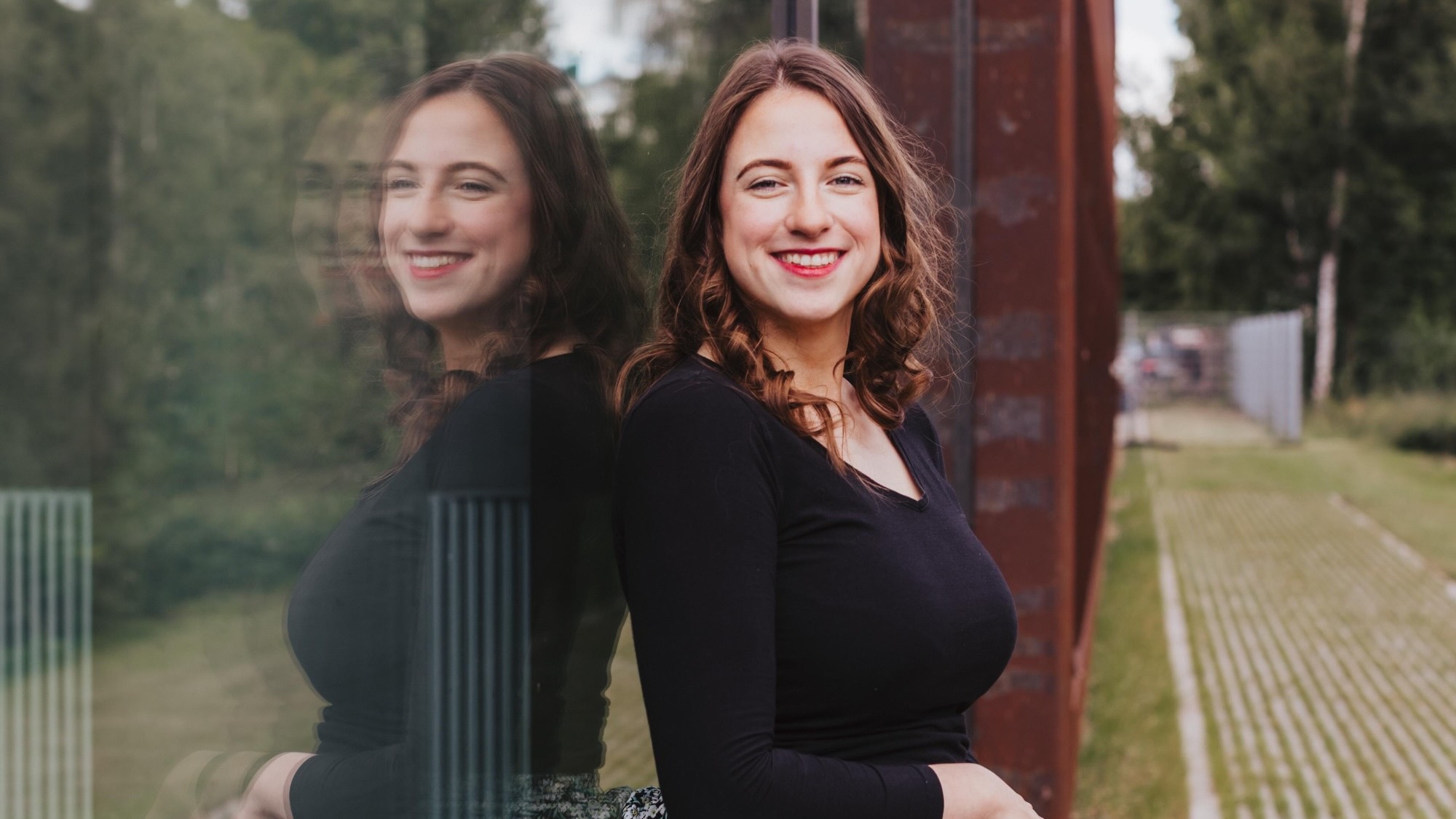
© Matej Meza / Universität Bremen
“Nursing Is More than a Calling; It’s a Skilled Profession”
Pauline Fischer talks about her journey from night shifts to studying at the University of Bremen, what she discovered along the way, and why she believes nursing science deserves a stronger voice
Pauline Fischer is a second-semester student in the Nursing Science Vocational Education program with a minor in Religious Education at the University of Bremen. Her path wasn’t always straightforward. After completing her training as a generalist nurse and working in the field, she decided to pursue a new direction. She enrolled at the university, without a traditional university entrance qualification, but driven by passion and determination. Her experiences here motivate her to help shape the future of the nursing profession.
Pauline, you are pursuing a degree after completing vocational training in nursing. What motivated that decision?
I completed the training program to become a generalist nurse, a program that has only existed since 2020 and was co-developed by Prof. Dr. Darmann-Finck. After passing my exams, I worked for a while. But I often felt lost, just like many nurses do. Staff shortages often mean being thrown into roles without adequate preparation. I started asking myself: Is this all there is? Then, I pursued further training as a wound care specialist and realized how much I loved learning. A lecturer really inspired me. Finally, I told my partner, “I can’t keep doing this for the rest of my life.” I wanted to leave active nursing, but stay involved in the field. That’s when I found the study program offered in Bremen.
Why did you choose the University of Bremen?
Because I was able to start immediately, without the two years of work experience required elsewhere. Plus, the support was incredible. The Student Office answered my endless questions (for almost two weeks) with patience and friendliness. Which showed me they truly care.
On top of that, Prof. Dr. Ingrid Darmann-Finck is a renowned expert, who helped develop the new nursing curriculum and is an active researcher – that impressed me, and of course I was already familiar with her name.
You’re combining nursing science with religious education. How do these seemingly different subjects connect for you?
At first glance, they seem very different, but religious studies foster critical and objective thinking. That is incredibly helpful in nursing, especially given the emotional nature of the work. It provides an “outside perspective” needed to contextualize complex ethical questions.
What attracts you to teaching at vocational schools?
I want to train new nurses in a practical, realistic way. I want to equip them to handle challenges professionally while maintaining their humanity. I believe nursing is more than just a calling; it’s a skilled profession, and that’s what I want to instill in them.
What’s student life like on the Bremen campus?
I love how compact everything is. It’s easy to get around, and there’s a real sense of community. The nursing science cohort is close-knit, and the religion instructors are very approachable. There are events like summer festivals and semester exchanges that make you feel like you belong.
You’re involved in the StugA (student organization), work night shifts, and care for family. How do you manage it all?
It’s definitely a lot! But being in the StugA is important because it lets me contribute by organizing events such as a summer festival, that build community. My job and family responsibilities also give me valuable insights for my degree. To unwind, I sing in the gospel choir or meet up with friends. My courses themselves are actually a source of balance because I pursue them voluntarily and with passion.
And how does the University of Bremen support you with all of this?
Most events are offered hybrid or online, and materials are readily available. There’s no mandatory attendance, which is a huge help. Plus, we have a large discussion group where we can share information. Additionally, the professors are very approachable and responsive to questions.
When did you first feel: “They’re looking out for me here?”
Even before starting the program. The application process, the counseling, and the patience shown were exceptional. As the first in my non-academic family to study at university, I had a lot to learn. In Bremen, I felt like we were all walking this path together. That sense of community is special.
What advice would you give to prospective students who don’t have a traditional path to university?
Don’t be afraid of going to university. Feeling overwhelmed at first is normal, but it gets better. You’ll grow into it. There are resources like tutorials, peer support, and guidance from professors. Nursing deserves more: more knowledge, more depth, more recognition. A university degree helps demonstrate that value.
In a nutshell: Why should people with diverse life paths study at the University of Bremen?
Because diversity is a top priority here.
Studying at the University of Bremen
Come as you are. That’s not just a slogan at the University of Bremen; it’s actively encouraged. If you’re thinking about studying here, you are welcome to join us at our Information Day for Prospective Students on June 24, 2026. You can also reach out to our Student Advisory Service or explore online all the opportunities the University of Bremen has to offer.